
Boredom isn’t wasted time: it’s the way the brain consolidates memories, processes emotions, and makes unexpected connections between ideas. No one brags about being bored over the weekend, and yet, ask yourself which moment from your last summer comes to mind most often: there’s a good chance it’s a moment when nothing was happening. A slow morning. A train platform. A traffic light turning green.
What Boredom Does to Your Mind
When the brain isn’t receiving stimulation, it doesn’t shut down—it switches modes. Neuroscientists call this the default mode network: it’s what consolidates memories and makes connections between ideas. That’s why your best ideas come to you in the shower or while walking—those are the rare moments when you let your brain do its work.
Studies have shown this in an almost comical way: participants who are allowed to get bored before a creative task perform better than those who are constantly stimulated. Boredom is not the enemy of the mind—it is its workshop.
Why has it become so difficult?
Because the instant remedy is right in your pocket. Every micro-break—whether it’s waiting in line, waiting for the kettle to boil, or waiting at a red light—is filled before boredom even sets in. The result: the brain never gets any downtime. We feel “drained but stimulated”—the worst combination.
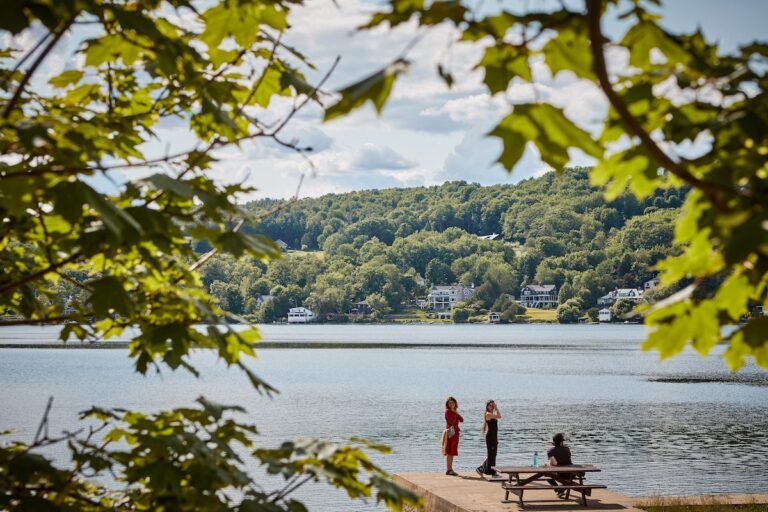
The solution isn’t discipline—it’s geography: going somewhere where there’s nothing to fill out. A patio facing the forest. A trail without audio guides. A fire. That’s exactly what we’ve built at Station Chêne Rouge in North Hatley, and that’s why the signal is weak in the units.
Three Boredom Exercises (Beginner Level)
The Whole Coffee Experience: Enjoy your morning coffee on the terrace, all by itself, with nothing else. Just the coffee, the forest, and you. The Quarter-Hour of Contemplation: No mandatory nap, no phones allowed—just watch the leaves move. The Walk with No Destination: Take a trail without knowing where it leads; come back when you feel like it. Forest bathing is the advanced version of this same art. Just 1.5 hours from Montreal, with a 4.9 out of 5 rating based on over 1,200 reviews, Station Chêne Rouge in North Hatley is an open-air workshop.
Yes, research links it to greater creativity, improved memory consolidation, and renewed focus. It’s overstimulation that wears us out, not calm.
Due to a lack of practice: the brain craves stimulation as a reflex. The discomfort usually subsides within 10 to 15 minutes, after which it gives way to relaxation.
Start with 15 minutes without a screen. When you're on vacation, aim for an entire day without a plan: that's often the moment guests remember most.
Your private terrace at sunrise, or a chair by the fire in the evening. Both are sure to please.