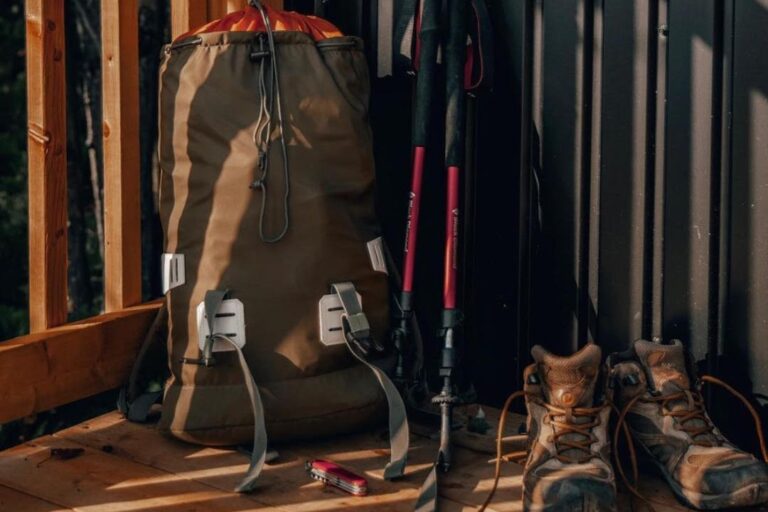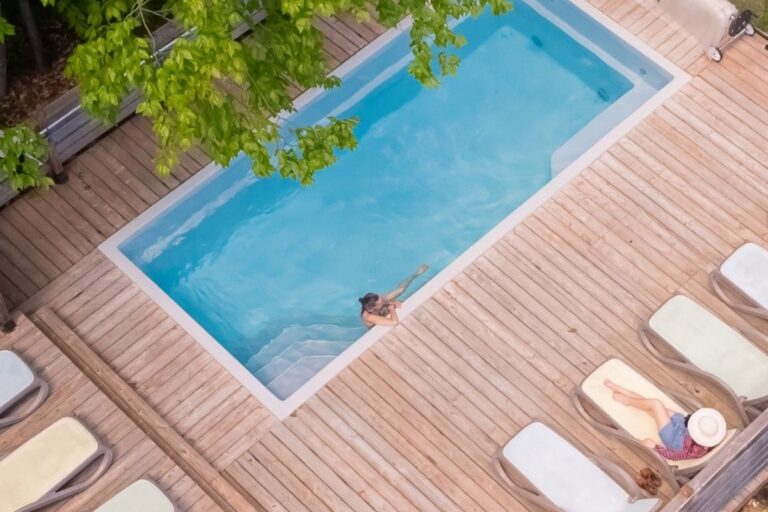

Forest bathing, or shinrin-yoku, is a Japanese practice that involves slowly immersing oneself in the forest, with all the senses open, without a specific destination or any expectation of performance. At Station Chêne Rouge, in North Hatley in the Eastern Townships, 4 km of private forest trails offer the opportunity to experience this just 1 hour and 30 minutes from Montreal.
What is a forest bath?
The term comes from the Japanese shinrin-yoku, which literally means “taking a forest bath,” much like one would sunbathe. Originating in Japan in the 1980s, the practice is simple: walk slowly under the trees, breathe, touch the bark, listen, and observe. No cardio, no summit to reach, no cell phones. You soak up the atmosphere of the forest instead of just passing through it.
This isn't a hike. A hike has a destination. A forest bath has only starting points: you stay right where you are, fully present.
What Science Says About It
Studies on shinrin-yoku have documented a measurable reduction in cortisol, the stress hormone, a drop in blood pressure, and a strengthening of the immune system. Research also shows that people who walk in the forest experience fewer symptoms of anxiety and depression than those who walk in urban areas.
Quebec has embraced the trend: according to the directory of the Association of Shinrin Yoku and Nature Immersion Guides (AGSY), the province now has more than 50 certified guides spread across 13 regions. The practice has evolved from a novelty to a genuine tool for well-being.
How to Practice Forest Bathing in 5 Steps
- Leave your phone behind. Or put it in airplane mode and tuck it away at the bottom of your bag. The forest bath begins when you lose your connection.
- Walk at half your normal speed. The goal is to slow down until the forest catches up with you.
- Engage one sense at a time. Five minutes for sounds. Five minutes for smells. Five minutes for textures: moss, bark, leaves.
- Find a spot. A tree, a rock, a stream. Sit down. Stay there for at least twenty minutes.
- Take your time coming back. The effects of a two-hour session last for several days.
Where to Practice It in the Eastern Townships
At Station Chêne Rouge, forest bathing requires no planning: the 4 km of private trails start right from the accommodations, on a 35-acre forest property in North Hatley. You’ll already be sleeping under the trees, in a mini-cabin, a safari tent, or a forest cabin. Forest bathing begins right at your doorstep—at sunrise if you like—when the trails belong exclusively to guests.
That’s the difference from a public park: no need to find a parking spot, no crowds, and no closing time. The forest is there before your coffee and after your dinner.
To extend your wellness experience, check out our rejuvenating getaway in the Eastern Townships and our comprehensive guide to North Hatley.
Fall, the best season
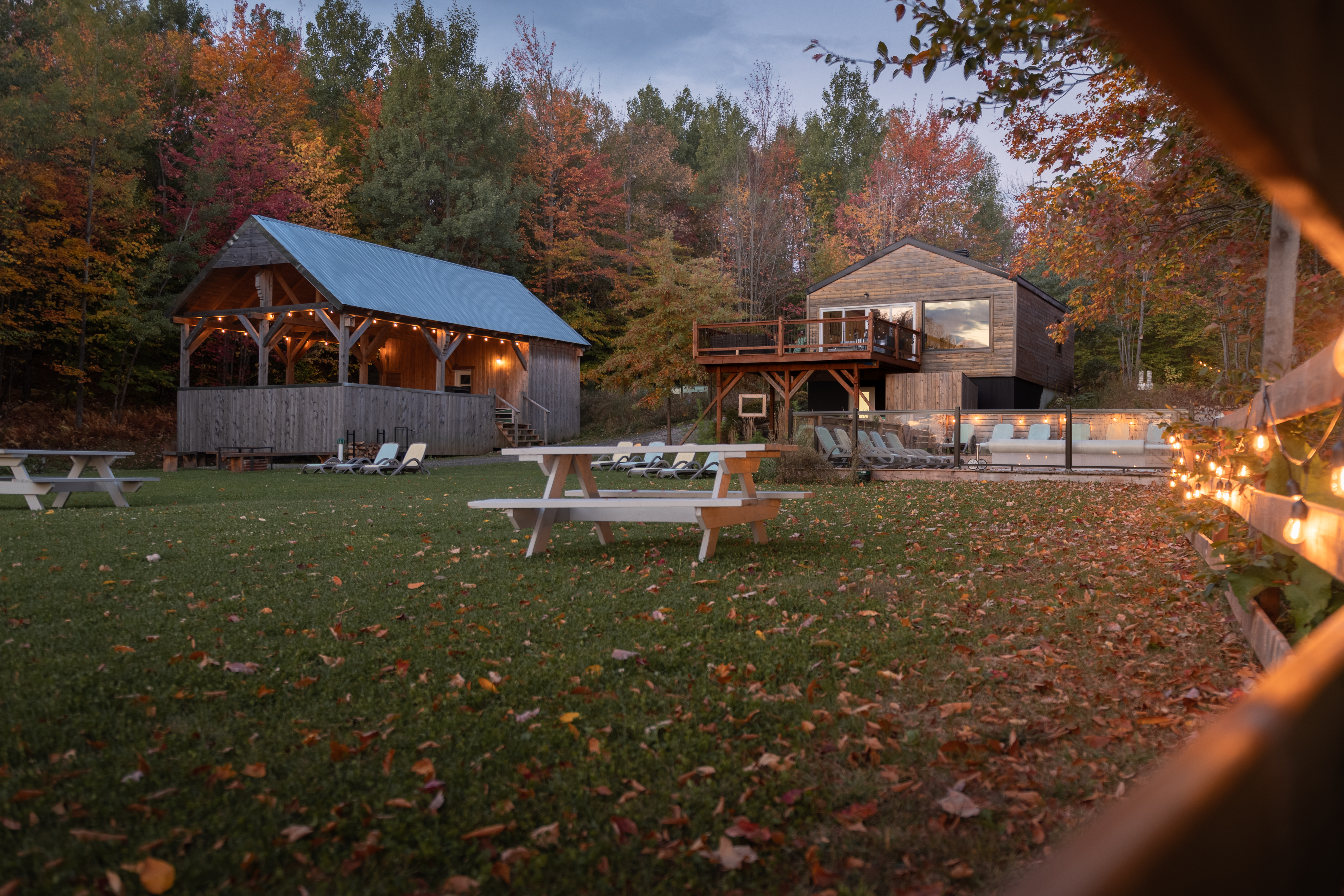
September and October are the peak season for forest bathing in the Eastern Townships. The colors transform every outing into a complete sensory experience: golden light, the scent of leaves, and the crispness of the morning. The accommodations at Station Chêne Rouge are heated—by wood stove or propane, depending on the unit—and the season continues through the end of October.
Regular guests often opt for the country club membership: for $149 a year, Dayclub access is free, allowing you to come for a day of forest bathing as often as you like, just 1 hour and 30 minutes from Montreal. With a rating of 4.9 out of 5 based on more than 1,200 reviews, Station Chêne Rouge in North Hatley has become a go-to destination for those who want to make spending time in the forest a habit rather than a rare treat.
Forest bathing is a Japanese practice that involves slowly immersing oneself in the forest, with all the senses open, without setting a specific distance goal. Studies have shown that it reduces stress, anxiety, and blood pressure.
At Station Chêne Rouge, in North Hatley in the Eastern Townships, 1 hour and 30 minutes from Montreal. The property features 4 km of private forest trails, accessible directly from the accommodations and the Dayclub.
An effective session lasts between 40 minutes and 2 hours. The stress-relieving effects last for several days. Consistency is more important than duration.
No. A certified guide enhances the experience, but the basics—walking slowly, breathing, and observing—can be learned on your own. The important thing is to leave your phone behind.