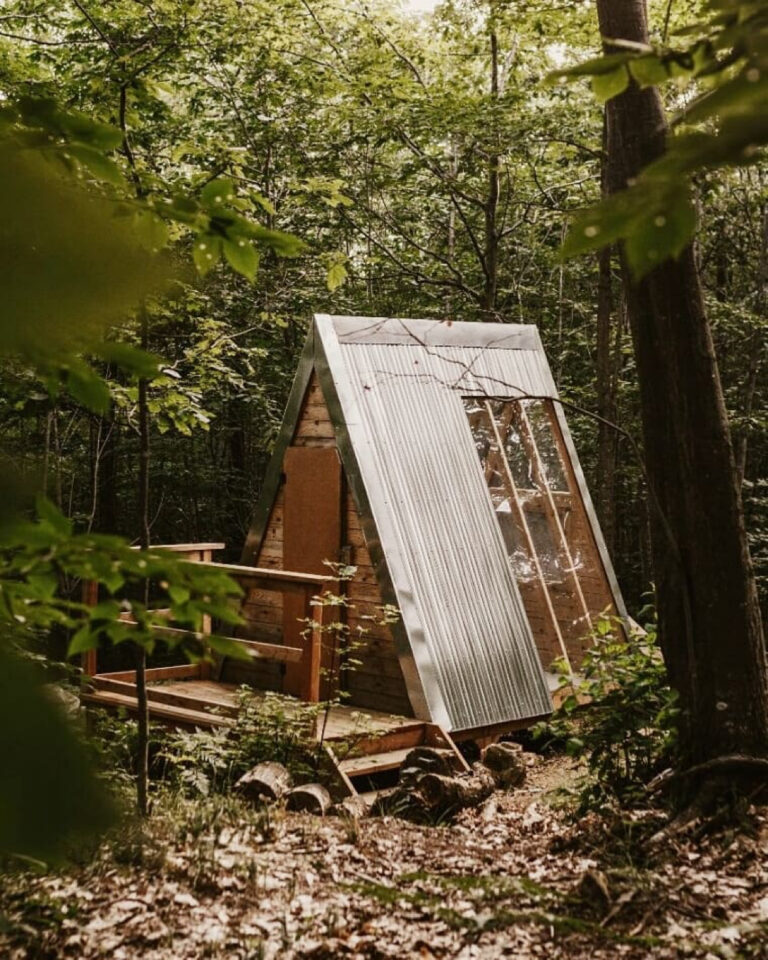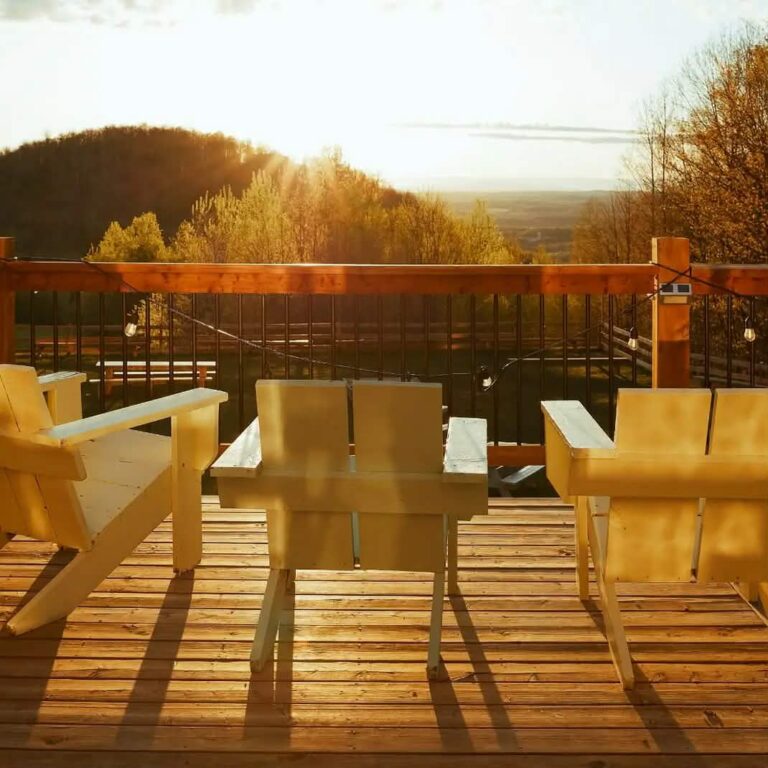

Sleep tourism is traveling to reclaim your nights: choosing a destination because you sleep better there than at home. Wellness tourism analysts (Global Wellness Institute, EHL) rank it among the leading trends for 2026–2027, and the forest outperforms most hotels: true darkness, natural silence, and no screens. At Station Chêne Rouge in North Hatley—just 1 hour and 30 minutes from Montreal—this is the core offering.
Why We Sleep Poorly (and Why the Forest Helps)
Your internal clock is regulated by light, and the city throws it off: screens in the evening, overhead lights late at night, streetlights at night. The forest reverses everything: evening truly falls, the night is dark, and morning gently wakes you up. One night resets your clock; three nights set it right. We’ve gone into detail about the mechanics of this in “Sleeping Without Screens: The Night That Truly Restores.”
What a Night's Sleep Requires
Nothing but the surroundings: a screen-free room, comfortable bedding, silence by 9 p.m., and the freedom to skip setting an alarm. No gadgets, no routines. Voluntary disconnection does the work that willpower cannot.
The Regular Sleeper Calculation
This is where sleep tourism becomes a habit rather than a trip: with the country club membership at $149 per year, guests enjoy a 30% discount on stays from Sunday through Thursday—precisely the quietest nights on the property. Details are on the membership page. Station Chêne Rouge, North Hatley: 4.9 out of 5 based on over 1,200 reviews, and the phrase we hear most often in the morning is, “I slept like I never do anymore in the city.”
Travel to sleep better: choose a destination where the environment (darkness, silence, no screens) helps restore your sleep. This is one of the major trends in wellness tourism for 2026–2027.
In the forest, at Station Chêne Rouge in North Hatley: truly dark nights, silence starting at 9 p.m., screen-free accommodations, 1 hour and 30 minutes from Montreal.
Natural light resets the body clock within 24 hours; two or three nights are enough to establish a rhythm.
No. The environment does the work: darkness, silence, a fire in the evening, soft light in the morning.